Valentine Moments Font Review
There I was, staring at a blank brand board, trying to find the right visual voice for a new artisanal café. The client wanted something warm, approachable, and slightly whimsical—something that felt like a handwritten note from a friend. That’s when I pulled up Valentine Moments. It wasn’t the first font I tried, but it was the one that made me pause and think, “This could be it.”
A Handwritten Touch with Classy Roots
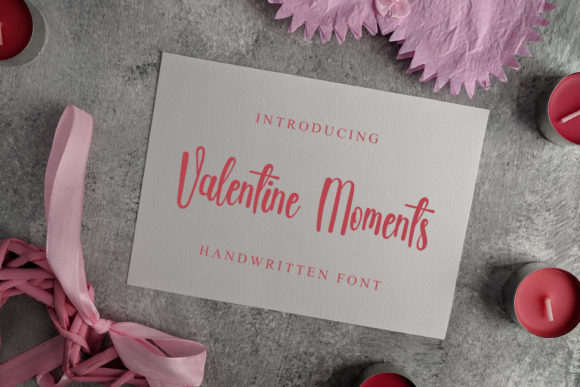
Valentine Moments is a casual handwritten font that walks the line between traditional calligraphy and modern design. Its strokes have a soft, organic flow, reminiscent of a well-practiced cursive script, but without the rigidity of a formal serif. It feels like someone wrote it with a fountain pen on a rainy afternoon, capturing that perfect balance of elegance and ease.
The font has a distinct personality—friendly yet refined. It works well in contexts where you want to convey warmth, creativity, or a personal touch. But don’t mistake it for being too informal; its structure gives it enough sophistication to hold its own in more polished branding projects.
Testing It in Real Design Work
I tested Valentine Moments across several design assets for the café project. On a logo concept, it added a sense of authenticity and craft, especially when paired with a simple icon or emblem. It looked great on a business card, where the delicate flourishes gave the contact information a memorable, handcrafted feel.
On packaging mockups, it brought a sense of intimacy to product labels. For a coffee bag or a bakery box, it felt like the brand had a story to tell. In web design, it worked well as a headline font, adding a human element to a homepage hero section. On social media graphics, it stood out without overwhelming the composition.
One thing I noticed was how the font performed in different sizes. At larger sizes, it maintained its character and readability. But in smaller text, like footnotes or captions, it became harder to read. That’s not a flaw—it’s just a reminder that this isn’t a font for long body text or formal documents.
When to Use Valentine Moments
Valentine Moments shines as a display or accent font. It’s ideal for headlines, logos, and short phrases where visual impact matters more than legibility. It pairs well with clean, modern typography systems, especially when used as a contrast to a sans serif or serif font.
For example, pairing it with a bold sans serif like Montserrat or a classic serif like Georgia can create a balanced, professional look. It also works well with other handwritten fonts, especially when used in a layered or multi-font design system.
It’s best avoided in situations where clarity is key. If you’re designing a menu, an instruction manual, or a corporate report, Valentine Moments might not be the right choice. But for creative, lifestyle, or artisanal brands, it’s a strong candidate.
Practical Tips for Using the Font
Before committing to Valentine Moments in a client project, I recommend testing it in multiple formats. Print it out on different materials—cardstock, paper, fabric—to see how it looks in real life. Also, test it on screens of varying sizes and resolutions to ensure it scales well.
Check the font’s file formats and webfont availability. If it’s available as a web font, make sure it loads quickly and doesn’t affect site performance. Also, review the commercial licensing terms before using it in any client work, especially if it will be part of a brand identity, merchandise, or digital product.
Finally, take time to explore the font’s alternate characters, ligatures, and swashes. These details can add subtle but meaningful variations that enhance the overall design.
Final Thoughts
Valentine Moments is a versatile, expressive font that brings a fresh, handmade feel to any project. It’s not a one-size-fits-all solution, but for the right brand, it can add a unique, personal touch that sets them apart. Whether you’re working on a café identity, a skincare label, or a creative studio logo, it’s worth considering as part of your typographic toolkit.